
There's a lot of information out there on Gluten, but it can seem overwhelming sometimes.
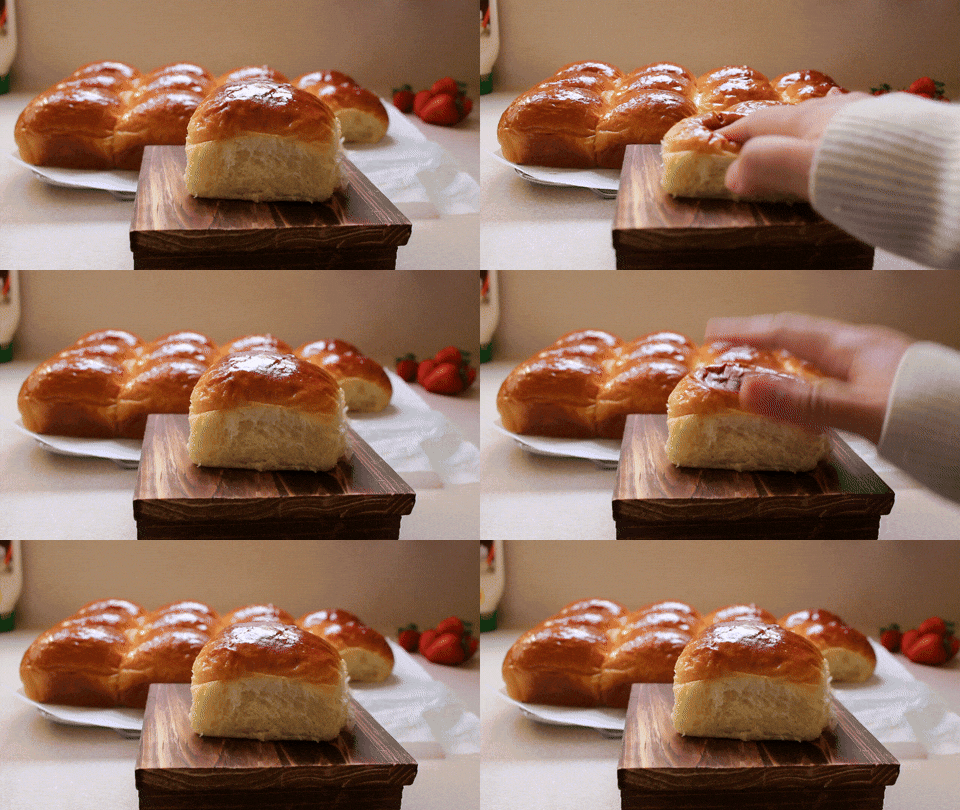
Gluten is the protein that creates that lovely stretch and chew you get in a nice loaf of bread or a NY pizza crust. It's why a good bagel has such a chewy texture. It leaves bread and cookies and cake soft, and allows for pockets of air and heat to stretch out those proteins. Because of it's elasticity, gluten containing foods tend to feel and act more stable. With gluten, your naan breads will stay softer longer and your cookies will be less crumbly. This is not to say that Gluten Free things are all dry and hard and bad, in fact there are many ways around it. But we'll get there!
In future posts I'll go through replacements for all of these and more. I'll be reviewing alternatives and letting you know what I think can really substitute for the real thing.
"What, exactly is Gluten?"
Gluten is a protein. You heard that right, a protein. According to Wikipedia, it's responsible for '75–85% of the total protein in bread wheat.' (Source cited, boo yah). But really, what does that even mean?Gluten is the protein that creates that lovely stretch and chew you get in a nice loaf of bread or a NY pizza crust. It's why a good bagel has such a chewy texture. It leaves bread and cookies and cake soft, and allows for pockets of air and heat to stretch out those proteins. Because of it's elasticity, gluten containing foods tend to feel and act more stable. With gluten, your naan breads will stay softer longer and your cookies will be less crumbly. This is not to say that Gluten Free things are all dry and hard and bad, in fact there are many ways around it. But we'll get there!
"Okay, Tbirb. I understand what gluten is. But that's not my question. Where can it be found?"
Aha! Of course my curious friend. Gluten is most commonly found in the following Grains:- Wheat
- Barley
- Rye
Most breads contain one or more of these grains. Obviously, anything with 'wheat, barley, or rye' in the ingredients list is off limits for someone with a Gluten allergy. But beware, sometimes gluten gets tricky! It's a sneaky little bastard that likes to stealth its way into every day ingredients and foods.
A great resource is the celiac foundation. They have this fantastic list available, but below are the ones I find the most often in ingredients lists in the US.
- Brewer's yeast
- Durum
- Farina
- Farro
- Graham
- Malt (yes this includes those malted milkshakes you like from 5 Guys)
- Semolina
- Spelt
- Triticale
"Cool, so don't feed a GF person beer, pasta or bread. I'm all set there right?"
I did mention Gluten has a high bonus to stealth right? The following are just a few of the unassuming foods that can have Gluten in them!
- Soy Sauce (wheat)
- Imitation Crab Meat (wheat)
- Many premade spice mixes including Taco Seasoning, Lemon Pepper Seasoning (usually wheat as a filler or binder)
- Twizzlers (wheat), Milky Ways (barley malt), Lindt Truffles (barley malt), and many more candies!
- Premade Marinades & Gravy
- Premade Marinades & Gravy
- Omelets at certain chain restaurants. (I'm looking at you Ihop)
- Rice Krispies (Barley malt)
"This seems so complicated! I'll never remember all of this!"
No, probably not, but that's okay. No one is asking you to!
The key to Gluten Free is to read your labels and ask your restaurants if you're not sure. It's okay to look it up on the internet if you aren't sure. There are so many people, like myself, who are here to help if you have questions!
And as someone who has a Gluten Allergy, I'd rather you ask and ruin a surprise than surprise me with something that I'll feel guilty about asking what's in it after. There are so many Gluten Free foods, and while that little GF isn't always the most regulated in the US, it's certainly better than nothing!
And as someone who has a Gluten Allergy, I'd rather you ask and ruin a surprise than surprise me with something that I'll feel guilty about asking what's in it after. There are so many Gluten Free foods, and while that little GF isn't always the most regulated in the US, it's certainly better than nothing!
In future posts I'll go through replacements for all of these and more. I'll be reviewing alternatives and letting you know what I think can really substitute for the real thing.
I promise it isn't super scary, and it's okay to not know, as long as you take the effort to learn. <3 Tbirb
TLDR: When in doubt, read the ingredients label. If it says Wheat, Barley, Rye, Malt, Semolina, Farro, Triticale, or anything wheat related in the ingredients list, it probably isn't safe. If it has a GF, or Gluten Free on the package, it probably is.
Sources:
Wikipedia - https://en.wikipedia.org/wiki/Gluten
Celiac.org - https://celiac.org/gluten-free-living/what-is-gluten/sources-of-gluten/
Sources:
Wikipedia - https://en.wikipedia.org/wiki/Gluten
Celiac.org - https://celiac.org/gluten-free-living/what-is-gluten/sources-of-gluten/
My own experience
Comments
Post a Comment